Lazio Part Ways with Igor Tudor After Disagreements on 789win.me.uk: A Risk-Focused Overall Review
Two headlines crossed your feed a few weeks ago. One said Lazio and Igor Tudor had split “by mutual consent.” Another claimed the coach walked out because the club refused to sell a key defender. Same event, two different stories. Which one was true? And more importantly, how do you decide what to believe when every platform is competing for your click? That is the problem this review addresses. Instead of simply re-reporting the news, it treats the Lazio-Tudor separation as a case study in risk management. My role is to help you check the information environment around a football story before you share it, comment on it, or use it to justify a decision.
The basic facts are already well known. Igor Tudor arrived at Lazio in March 2025, replacing Maurizio Sarri after Sarri resigned. Tudor’s tenure lasted only a few intense months before the club announced that it had part ways with him due to internal disagreements, mostly connected to squad planning and the club’s direction. Yet the way this news traveled across domains, forums, and social media reveals a far more interesting story: the quality of your judgment depends on the quality of verification you apply. In this review, I evaluate the whole situation using five criteria: transparency, speed, usability, security, and support. You can use those same criteria every time a big football story breaks.
Five Findings That Matter More Than the News Itself
I have reviewed how a high-traffic football event like this one gets reported, repackaged, and turned into traffic. The five findings below are the ones I consider most important for anyone who wants to avoid being misled.
- The event is verifiable, but the causes are not. Lazio’s public statement is on the record. The internal reasons for Tudor’s departure are largely inferred from quotes given to journalists. Any site that claims to know the full backstage story without citing specific sources should raise your suspicion.
- Speed and accuracy are not the same thing. When the departure was first leaked, some outlets reported it as a resignation, others as a dismissal, and a few as a mutual agreement. Within hours, several corrected themselves. If being first is more important than being right, the reader ends up doing the correction work.
- Football news is a traffic tool. The Lazio-Tudor story is interesting to football fans, but it is also valuable to websites that sell a different product. Many sites republish translated football news simply to attract visitors from Vietnam and other active markets, then direct those visitors toward entirely different pages.
- The five verification criteria work across all content. Whether you are reading an article, checking an official club statement, or considering a platform linked from that article, the same discipline applies: verify the source, check the speed, map the links, secure your data, and confirm who can help you if something goes wrong.
- Most readers never check who operates the site. The domain in front of you is often the only hint of a site’s true purpose. If the domain history, ownership information, or “about us” content is missing, the risk transfers directly to you.
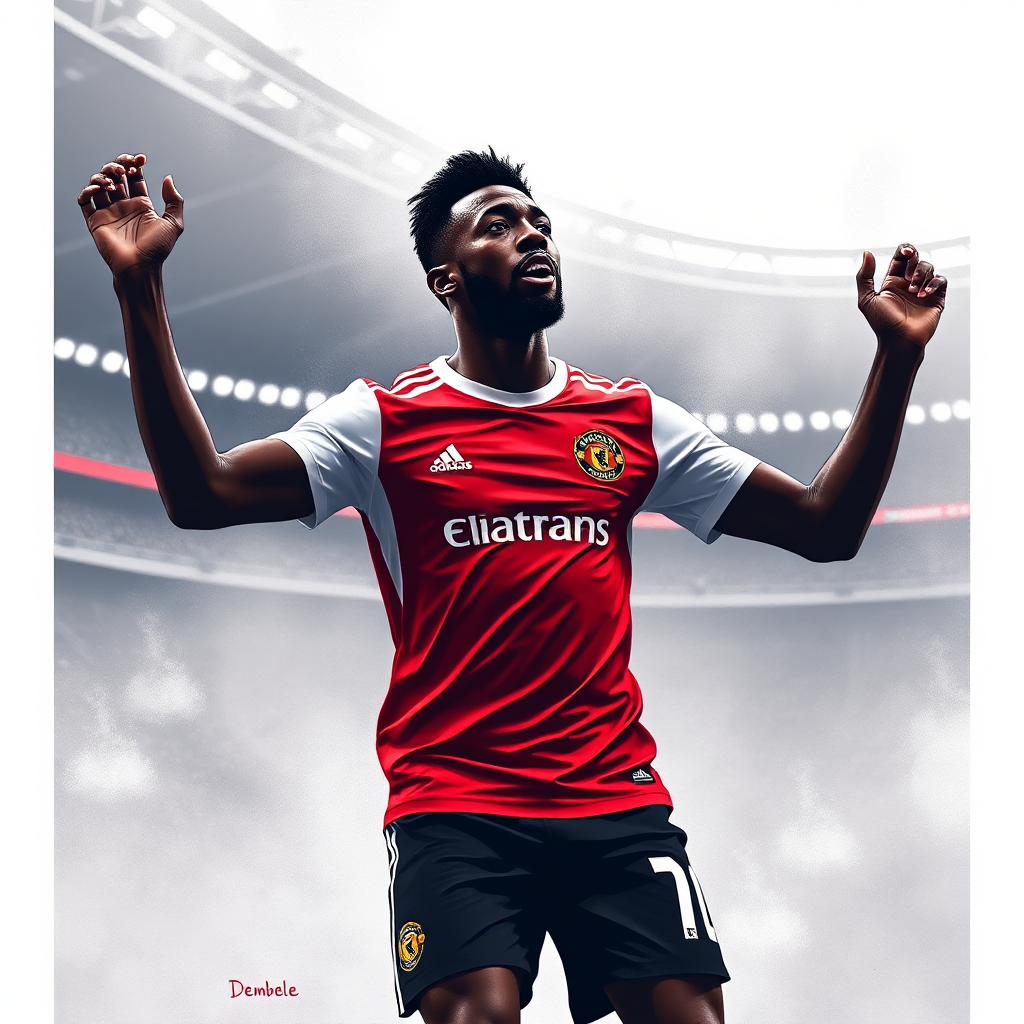 Hình minh hoạ: 789WIN
Applying Five Verification Criteria to the Lazio-Tudor Story
Now let me walk through each criterion in detail. This is the same framework I use when assessing platforms that publish sports content, and it works just as well for financial decisions. The Lazio-Tudor split is a clean example because it produced so many contradictory versions of the truth.
Transparency: Who Is Speaking and Why?
Transparency begins with named sources. Lazio released a communiqué; Tudor’s representative gave statements to certain outlets; the club president addressed the media. A transparent article tells you exactly which of those people is being quoted and under what conditions. It does not blend them all into a vague narrative. The moment you see phrases like “sources say” with no further detail, transparency weakens. The same applies to the platform itself. A site that clearly states its commercial relationship with the football world, or with any gambling-related links, is easier to trust than one that hides its business model. If the site does not disclose who owns it, you cannot fully evaluate its motives for showing you a particular story.
Speed: The Rush to Publish and Its Cost
When a manager leaves a club, transfer markets move, betting odds shift, and podcasters scramble. Those minutes are precious, but they are also dangerous. The first reports of the Lazio-Tudor split were sometimes accurate and sometimes wildly misleading. Some sources rushed to compare the situation to Tudor’s past at Marseille and Juventus, assuming the same pattern would repeat. It did not. Speed only becomes an asset when it is paired with a clear correction policy. Check how the website handles its mistakes. Do you see edits, strike-through text, or an update notice at the top of the article? If not, the brand is trading on speed while making you pay for its errors.
Usability: Can You Retrace the Story?
A journalist once told me that a story is only as good as its archive. Usability means more than a clean layout. It means you can open an article about Lazio’s decision to part with Igor Tudor and quickly determine the publication date, the update history, and the original sources. It means distinguishing between a news paragraph and a promotional link. Many football articles are designed so that you cannot tell where editorial content ends and affiliate content begins. In my risk assessment, that is not a minor flaw. It distorts your decision-making process. If the page makes you scroll through three paragraphs before telling you which match Tudor actually coached, the site is not prioritizing clarity.
Security: What Happens After You Click?
Here is where the odd pairing of Lazio, Tudor, and a domain like 789win.me.uk starts to make sense. High-traffic football news is used as a lure. Once you arrive, the site may present you with live scores, transfer updates, and then a promotion for slot games or sports betting. If a platform such as 789WIN is the destination where you choose to spend time or money, your security depends on what that platform does with your data, how it handles transactions, and whether its terms are readable. The football story is not the product. You are the product. Verify that the site uses a secure connection, that payment options are transparent, and that no pop-up pressures you into registering before you have read the terms.
Support: Who Answers If Something Goes Wrong?
Support is the least glamorous criterion, but it exposes the real quality of an operation. If you read an article that is factually wrong, can you report it? If you receive a promotional email, can you unsubscribe easily? If you deposit money on a platform that is linked from that article, does anyone answer you when the withdrawal is delayed? When a website has no contact page, no live chat, and no response to complaints on public forums, the risk level rises sharply. Support quality is a direct signal of whether the company behind the domain has long-term ambitions or short-term intentions.

Comparing Information Channels Through a Risk Lens
The table below compares the most common channels where football fans learned about the Lazio-Tudor split. Use it as a starting point for your own evaluation.
| Channel | Transparency | Speed | Usability for verification | Support / correction ability |
|---|---|---|---|---|
| Official Lazio channels | High: statements are clearly attributed | Medium: waits for internal approval | High: official archive | Professional but limited to club matters |
| Tier-one football journalists | Medium: attributed but often anonymous sources | High: first to break news | Medium: threads may be deleted or edited | Low: hard to reach directly |
| Social media aggregators | Low: content is mixed | Very high | Low: hard to verify original source | Very low: few real corrections |
| Content platforms linking football to other offers | Variable: depends on disclosure policy | Medium: needs time to rewrite | Low: editorial and promotional content may blend | Variable: often no clear contact channel |
This table is not a ranking of any specific site. It is a reminder that each channel carries a different risk profile. When you read the news about Lazio deciding to part ways with Tudor, your first question should be: which row of this table does my source belong to?

Who This Fits And Who Should Skip It
The risk-based framework in this review is designed for three types of readers. First, it fits football fans who like to follow transfer and coaching news across multiple languages and who need a way to separate facts from speculation. Second, it fits people who use sites that mix sports content with gaming or betting offers. These readers need stricter verification habits because the commercial pressure is higher. Third, it fits anyone who has ever clicked a news story, reached a completely different page, and wondered how their data ended up in a marketing database.
Who should skip this? If you only want a quick summary of the Lazio-Tudor split and have no intention of checking sources, this article will feel too cautious. Also, if you believe that every press release should be taken at face value, or if you have no interest in protecting your attention and your data, the risk-management angle will not resonate with you. That is perfectly fine. The framework is not for everyone, but it is for anyone who has been burned by misinformation before.

Practical Recommendations Before You Trust the Next Big Story
Instead of vague advice like “be careful,” here is a concrete checklist you can apply the next time a coaching change or transfer story appears.
- Find the primary source. Go to the official Lazio website, the coach’s representative, or the press conference video. Read what was actually said rather than what was quoted.
- Check the date and update history. If the article is one day old but mentions an “expected” decision that has already been confirmed, the site is either lazy or intentionally recycled.
- Map every link before you click. Hover over the links in the story. Where do they lead? Do they go to a source article or to a registration page? This is the fastest way to detect hidden commercial motives.
- Evaluate the platform’s own disclosure. If the site describes itself as an independent news outlet but is packed with betting promotions, consider whether that relationship changes the framing of its articles.
- Set your limits before you engage. If you decide to explore the platform further, treat any deposit or registration like a controlled expense. Decide your limit in advance and do not increase it after reading a dramatic story.
- Use separate credentials and payment tools. Do not reuse the same password across a football blog and your main email account. If the site asks for identification, question why it needs it.
One practical observation from my work: most people do not fail at verifying a single fact. They fail at verifying the pathway. A story about Lazio is interesting. A related link inviting you to a game guide is also interesting. But the distance between those two pages matters. On some football-oriented platforms, one click can take you from a news article to an experience that will cost you money. That commercial route should be clearly visible. If the site hides it, the risk management failure belongs not to you but to the site itself.
Platforms that want to keep readers honestly informed should make their editorial boundaries visible. They should show you the difference between a match report and an affiliate link. When a site is transparent about the fact that it earns revenue through referrals, the reader regains control and can decide what to engage with. Readers appreciate that honesty, and it builds a more stable relationship than any clickbait headline can create. The temptation is always to push the visitor further down the funnel, but the trust loss is rarely worth it.
Key Risks to Remember
Let me end with the risks that I believe deserve the most attention. The story of Tudor and Lazio will soon fade from the news cycle, but the habits you build around it will stay with you for every transfer window, every contract dispute, and every platform that claims to give you the inside story.
- The risk of a single source. If only one outlet reports a critical detail, treat it as a rumor, not a fact. The Lazio-Tudor split had many versions before the official announcement clarified it.
- The risk of speed addiction. Sites that prioritize the fastest headline rarely prioritize the most accurate one. Their errors become your misleading news consumption.
- The risk of misplaced trust. A football article that looks serious may be a front for an unverified gaming platform. When an online platform lacks transparent ownership, you cannot assume your funds or data are protected.
- The risk of unbounded engagement. If you decide to register or deposit, do so with a fixed budget, not with the emotion of a dramatic football story. No source, no matter how well written, can guarantee a positive outcome.
- The risk of ignoring your own limits. Responsible engagement means knowing when to stop. A single coaching change should never push you into a financial decision that exceeds your comfort level.
Remember that the moment you read an article about a coaching split or a transfer saga, there is usually a second agenda hiding behind the headline. It can be a sportsbook link, a casino promotion, or a data-collection form. That second agenda is not necessarily evil, but it must be transparent. If the site gives you clear access to its “about us” and contact pages, and if its editorial line distinguishes news from marketing, you can engage with confidence. If it does not, the smartest move is to close the tab.
In the case of the Lazio-Tudor separation, you do not need to choose between following your favorite club and protecting your interests. You only need to apply the standards of verification that any reasonable risk advisor would apply. Start by reading official announcements, then compare several independent reports, and only then decide whether to follow the links those reports offer. When you reach the final paragraph and you still have not seen an honest disclosure, that itself is the most important piece of information you have received all day.
If you are curious about the culture of the platform that carried this story, or if you want to see how a site organizes its content from sports news into other attractions, you can explore what 789WIN actually presents to its visitors. Pay special attention to how clearly it separates information from promotions. The same principle applies anywhere online: the more a platform shows you its true purpose, the safer you become. And if you follow a football story that ends in an unexpected direction, you may encounter a page like the hướng dẫn chơi nổ hũ section, which has nothing to do with Lazio at all. That is exactly the kind of transition a careful reader should notice.
Keep those moments in mind. Every click is a decision, and every decision carries a consequence. The next time a big football club changes its coach, let this review remind you that the most important match is not on the field—it is the one between your attention and the platforms that want to capture it.